Gala Sponsorship Levels: 3 Copy Ready Templates and Governance Rules

Gala Sponsorship Levels: 3 Copy Ready Templates and Governance Rules
Offer a clear four- to six-tier ladder — Presenting, Platinum, Gold, Silver, Bronze — plus separate underwriting items for things like valet or centerpieces. Price bands should match your revenue goal and the fair value of tickets included, with a flagship tier priced well above the rest. Reserve scarce, experiential assets such as private receptions or a sponsor-owned fundraising moment for your top one or two tiers only, and cap their availability so they hold their value.
TL;DR:
- The top sponsorship tiers should include scarce, experiential assets like private receptions or fundraising moments to justify premium pricing.
- Multi-year recognition packages and sponsor-owned experiences add significant value over simple logo placements, encouraging higher-tier commitments.
- Tracking inventory, fulfillment deadlines, and clear deliverables are essential for maintaining sponsor satisfaction and protecting the event’s exclusivity.
- Automating sales, tracking, and logistics with a dedicated platform reduces last-minute errors and streamlines operational management.
- Limiting high-value experiences to one or two sponsors prevents tier overlapping and preserves sponsor perception of exclusivity and value.
Table of Contents
- Three copy-ready sponsorship menu templates you can adapt
- How to price tiers, choose counts, and allocate deliverables
- Operational checklist for fulfillment, inventory governance, and deadlines
- Experiential add-ons and scarce moments that justify premium pricing
- What recent prospectuses teach about value
- Planner perspective: common pitfalls and quick fixes
- How Jubiliq streamlines selling and fulfilling sponsorship packages
- Templates, prospectuses, and pages to model
- Sources
- FAQ
Three copy-ready sponsorship menu templates you can adapt
Most organizers do not need to invent a sponsorship structure from scratch. Three templates cover the vast majority of galas: a small community event, a mid-size regional fundraiser, and a flagship gala with citywide visibility. Each one follows the same logic: a named tier ladder, clear deliverables per tier, and at least one scarce experiential benefit reserved for the top.
Small gala template (five tiers, $1,000 to $10,000 range) A small gala typically seats under a few hundred guests and relies on a compact ladder to keep the sponsor conversation simple.
- Presenting Sponsor, around $10,000: one table of ten, top logo placement on all materials, podium remarks, and a dedicated social media feature.
- Gold Sponsor, mid-level price: one table of ten, logo on program and step-and-repeat banner, verbal recognition from the podium.
- Silver Sponsor, lower-mid price: four tickets, logo on program, name listed on event website.
- Bronze Sponsor, modest price: two tickets, name listed in program.
- Friend of the Foundation, low-level contribution: no tickets, name listed on a digital thank-you slide.
This structure mirrors what smaller nonprofits typically publish, where named tiers carry consistent ticket counts down the ladder, as seen in the Forsyth Tech Sapphire Gala Sponsorship Levels.
Mid-size gala template (five tiers, $2,500 to $50,000 range) A mid-size gala balances hospitality with recognition, and usually adds a VIP element that the small template skips.
- Diamond Level, high five-figure price: two tables of ten with VIP seating, private pre-event reception, full-page program ad, and a named fundraising moment such as a live check presentation.
- Platinum Sponsor, mid five-figure price: one table of ten with VIP seating, half-page program ad, podium mention.
- Gold Sponsor, mid four-figure price: one table of ten, quarter-page program ad, logo on event signage.
- Silver Sponsor, modest high four-figure price: four tickets, logo on program.
- Pearl Level, lower mid price range: two tickets, name listed digitally.
This band structure lines up with prospectus data showing mid-tier sponsorships commonly falling in a lower to mid five-figure range, with presenting-level packages more expensive, according to the NJCTS 2026 gala sponsorship opportunities.
Flagship gala template (five tiers plus underwriting, $5,000 to $250,000 range) A flagship event, the kind that fills a ballroom with 500 or more guests, justifies a much wider spread and a true headline tier.
- Sapphire Presenting Sponsor, top-tier six-figure price: exclusive naming rights, three tables with premium placement, private reception for twenty guests, ownership of a sponsored fundraising moment.
- Rooftop Presenting Sponsor, high six-figure price: one available, hosts a rooftop pre-event reception, two tables, top-tier branding across all channels.
- Platinum Sponsor, mid five-figure price: one table, VIP seating, full-page ad, podium remarks.
- Gold Sponsor, high four-figure to low five-figure price: one table, half-page ad, logo on signage.
- Pacesetter, moderate four-figure price: two tickets, name listed on event website and program.
Flagship galas often list a presenting or title-level sponsorship in the high five- to six-figure range, a pattern confirmed across multiple reviewed prospectuses in the NJCTS 2026 gala sponsorship opportunities.
| Template | Price band | Tickets or tables | Branding and visibility | Experiential exclusive | Availability limit |
|---|---|---|---|---|---|
| Small gala | $500 to $10,000 | Two tickets to one table of ten | Program listing, website name, podium mention at top tier | Social media feature for Presenting Sponsor | Unlimited except Presenting |
| Mid-size gala | $2,500 to $50,000 | Two tickets to two tables of ten | Program ads, event signage, digital listing | Private pre-event reception, named fundraising moment at Diamond | One Diamond Level slot |
| Flagship gala | $5,000 to $250,000 | Two tickets to three tables | Full branding package, premium placement across channels | Rooftop reception, naming rights, sponsored moment ownership | One Sapphire Presenting, one Rooftop Presenting |
How to price tiers, choose counts, and allocate deliverables
Pricing a sponsorship ladder starts with a revenue target, not a guess at what feels fair. A workable formula: take your total sponsorship revenue goal, subtract the fair market value of the tickets and goods you are giving away, and divide what remains across your tier structure based on how many units you expect to sell at each level.
Say your gala needs $150,000 in sponsorship revenue. If a table of ten has a fair ticket value of $2,000, and you plan to include one table in your Platinum tier priced at $25,000, then $23,000 of that price reflects the charitable contribution and $2,000 reflects the tickets. That distinction matters for how sponsors and your organization treat the payment, a point the Children’s National Hospital gala sponsorship overview addresses directly: organizers should separate the fair value of tickets and sponsored goods from the tax-deductible donation portion, and get professional advice before describing deductibility to sponsors.
- Set your total sponsorship revenue goal and subtract the cost of fulfillment (tickets, printed materials, staff time).
- Estimate how many sponsors you can realistically close at each tier based on past years or your sponsor prospect list.
- Price your top tier first, since it anchors sponsor perception of value down the ladder.
- Price each lower tier at roughly 40% to 60% of the tier above it, adjusting for what deliverables you can actually guarantee.
- Reserve any single-unit premium item, like a naming right or a sponsored moment, as a standalone line rather than folding it into a numbered tier.
Four to six tiers tend to work best because sponsors can compare them at a glance without feeling like they are choosing from a menu with too many near-identical options. Adding a seventh or eighth tier usually means two tiers overlap too closely in price or deliverables, which confuses the sales conversation rather than helping it.
Pro Tip: Offer a modest discount, around 10%, to sponsors who commit to the same tier for two consecutive years, and document the renewal terms in writing so the discount does not become an unstated expectation.

Operational checklist for fulfillment, inventory governance, and deadlines
A sponsorship menu only works if you can deliver on it. Before you publish prices, build the tracking and policy language that keeps fulfillment clean.
- Track inventory for every scarce item, including tables, VIP reception seats, and underwriting add-ons, in a single running sheet updated as each sponsor signs.
- Write substitution language into every contract for what happens if a tier sells out, since ticket inventory changes after packages launch are a common operational risk, as shown on the YMCA of Metro North 2026 gala sponsorship page, where packages were adjusted after seats sold out and replaced with alternative benefits.
- Set firm deadlines for sponsor-provided materials: logos typically due eight weeks before the event, print ad copy six weeks out, and guest names for seating two weeks out.
- Offer a documented alternative, such as extra digital prominence or a private briefing, when a sponsor’s preferred tier is no longer available.
- Keep a short note in every contract separating the fair value of tickets from the charitable contribution, and recommend sponsors consult their own tax advisor rather than relying on your description.
Experiences that come with limited availability tend to hold their pricing better than scalable logo placements. Organizers that add distinctive experiential deliverables, such as VIP seating or a private reception, report stronger sponsor satisfaction and more consistent premium pricing than those relying on logo placement alone, according to the 2026 Online Journalism Awards gala sponsorship prospectus.
Experiential add-ons and scarce moments that justify premium pricing
The gap between a $25,000 tier and a $100,000 tier rarely comes down to logo size. It comes down to access. A private pre-event reception for twenty guests, offered to a single sponsor, creates a reason to pay far more than an extra line of text in the program.
- Private reception or VIP pre-event: offer it as a singleton, tied to your top one or two tiers only.
- Sponsor-owned fundraising moment: let one sponsor underwrite the live auction match or present a check onstage, a structure that widens participation without expanding the main tier ladder, per the Lung Cancer Research Foundation 2026 sponsorship prospectus.
- Branded guest experiences: a sponsored photobooth, a signature cocktail named after the sponsor, or premium seating near the stage.
- Price and limit each add-on separately from the numbered tiers, so a sponsor who wants only the reception does not have to buy a full Platinum package to get it.
What recent prospectuses teach about value
Reviewing prospectuses from 2024 through 2026 shows a consistent pattern: multi-year recognition tends to appeal to major donors more than one-off signage upgrades. The MCCA gala materials present a two-year Founders Circle concept built around continuity and relationship access rather than a single expensive night, with eligibility rules and a renewal schedule spelled out in advance.
Experiential ownership, not incremental logo placement, is what moves sponsors up the ladder. A sponsor who gets their name on a private reception or a live fundraising moment perceives more value than one who simply gets a bigger logo. Inventory governance, listing exactly how many units of each tier are available, protects that value and keeps sponsors from feeling shortchanged when a tier sells out mid-campaign.

Planner perspective: common pitfalls and quick fixes
The most common sponsorship menu mistake is vague deliverables. “Logo recognition” means nothing until you specify where the logo appears, what size, and for how long. The second most common mistake is failing to cap inventory, which leads to selling three “exclusive” reception slots and then having to explain to each sponsor why the reception is not actually exclusive.
The fixes are unglamorous but effective: standard contract language that spells out every deliverable, automated reminders for artwork deadlines, and a fulfillment checklist that someone actually owns. Late artwork collection derails more sponsor relationships than pricing ever does, mostly because it turns into a scramble in the final two weeks before the event.
— HCRF
How Jubiliq streamlines selling and fulfilling sponsorship packages
Building a sponsorship menu is one problem. Tracking which sponsor picked which tier, whether their logo arrived, and how many tables are left in Platinum is a different one, and it is usually the one that eats your time in the final month before the gala. The operational side is consolidated in one place instead of being split across spreadsheets, e-mail threads, and a separate ticketing tool.
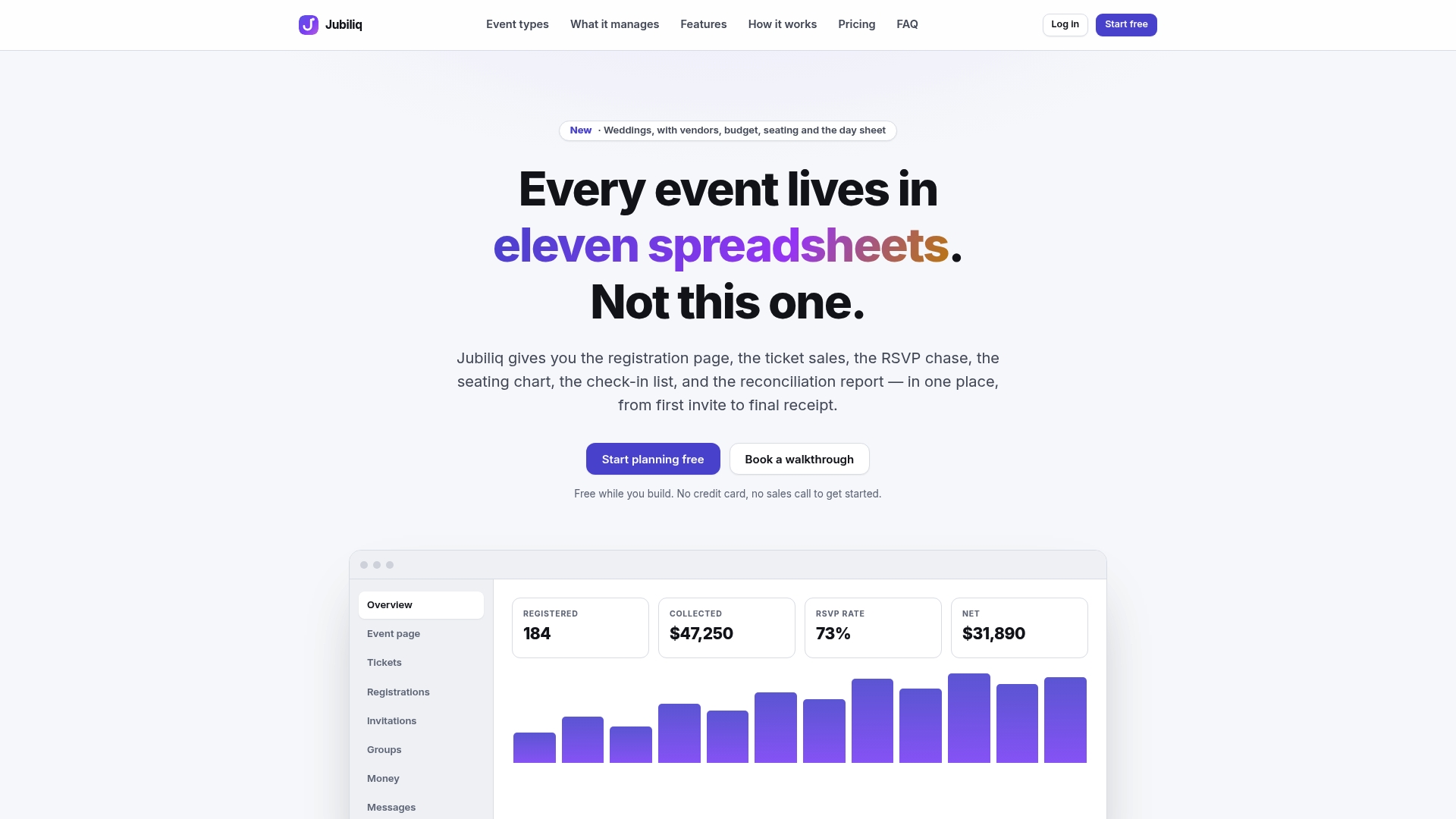
- Ticketing and sponsorship inventory: sell tiers and track table or seat availability in real time, so you know the moment Platinum sells out.
- Donor and sponsor tracking: keep contact details, tier selection, and fulfillment status in one record per sponsor.
- Financial tracking: see sponsorship revenue against your goal as commitments come in.
- Printable day sheets: hand your event-day team a single sheet showing which sponsor gets which table, seat, or signage placement.
An adaptive interface adjusts to a gala setup specifically, so the tools relevant to sponsorship sales and guest seating surface automatically instead of being buried among features built for other event types.
| Need | Jubiliq feature |
|---|---|
| Sell sponsorship tiers and tickets | Ticket and sponsorship sales |
| Track sponsor fulfillment | Donor and sponsor tracking |
| Monitor revenue against goal | Real-time financial tracking |
| Coordinate event-day logistics | Printable day sheet |
Review the Starter, Organizer, and Enterprise plans to see which fits your gala size, with Organizer priced at 2% per paid registration and Starter free for events without paid tickets.
Templates, prospectuses, and pages to model
A few published prospectuses are worth reading directly before you finalize your own menu.
- The YMCA of Metro North 2026 gala sponsorship page is a good model for governance language around sold-out tiers.
- The Lung Cancer Research Foundation 2026 sponsorship prospectus shows how to structure sponsor-owned fundraising moments as standalone items.
- The MCCA gala materials illustrate multi-year recognition packaging for major donors.
- For hospitality-driven experiential ideas, Unveiled New York’s private events page and Kokcha’s restaurant event planning workflow both offer activation ideas worth adapting for a sponsor reception or branded moment.
Sources
- 2026 Online Journalism Awards gala sponsorship prospectus
- Lung Cancer Research Foundation 2026 sponsorship prospectus
- YMCA of Metro North 2026 gala sponsorship page
FAQ
What are the five levels of sponsorship?
A common five-level structure runs Presenting (or Platinum), Gold, Silver, Bronze, and a lower-cost Friend or Patron tier, though names vary by organization. Some prospectuses swap in Diamond, Opal, or Pearl language instead, but the underlying logic, a descending ladder with fewer deliverables at each step down, stays consistent.
What are the four main types of sponsorships?
Sponsorships are generally categorized as financial (cash payment for a tier), in-kind (goods or services instead of cash), media (promotional exposure trade), and experiential (access to a branded moment or reception). A single gala tier can combine more than one type, such as a cash payment that also includes in-kind branded items.
What are the different types of event sponsorship levels?
Event sponsorship levels typically split into tiered packages (Platinum, Gold, Silver, Bronze, or similarly named levels) and underwriting or add-on sponsorships, which cover a specific cost like valet, centerpieces, or the photobooth rather than the event as a whole. Underwriting items are usually priced and sold separately from the numbered tier ladder.
What does sponsorship level mean?
A sponsorship level, or tier, is a named package that bundles a specific price with a defined set of benefits, such as tickets, branding, and recognition. Higher levels include more tickets, more visible branding, and access to scarce experiential benefits like a private reception, as outlined in the 2026 Online Journalism Awards gala sponsorship prospectus.
How far in advance should I sell gala sponsorships?
Most organizers begin outreach four to six months before the event and set firm deadlines for sponsor deliverables, such as logos roughly eight weeks out and guest names about two weeks before the gala. Locking in top-tier sponsors early helps anchor pricing conversations with mid-tier prospects who follow.