Lock Fundraising Goal: Golf Tournament Planning Playbook for Organizers

Lock Fundraising Goal: Golf Tournament Planning Playbook for Organizers
A successful golf tournament rests on five decisions made early: a clear purpose, a locked date and venue, a format that fits your players, a registration and sponsorship plan and a day-of operations plan. Start by forming a steering committee and setting a fundraising target, then centralize the moving pieces (guest lists, budgets, vendor contracts) in one place, whether a shared spreadsheet or a platform like Jubiliq, so nothing falls through the cracks.
TL;DR:
- A year-long planning period is ideal to secure course availability, develop sponsor packages, and execute a comprehensive marketing strategy.
- Utilizing a clear format like a scramble simplifies pace of play and promotes inclusivity, especially in mixed-skill fields, while alternative formats can add competitiveness.
- Negotiating with courses using weekday dates, multi-year commitments, and clear contract clauses can significantly reduce costs and prevent misunderstandings.
- Sponsorship tiers, tiered registration, and additional revenue streams like contests and raffles are essential to structure income without relying on a single source.
- Centralized event management platforms streamline registration, budgeting, sponsor tracking, and volunteer coordination, reducing operational errors and stress.
Table of Contents
- Building Your Golf Tournament Timeline and Checklist
- Choosing a Format and Understanding Scoring Trade-Offs
- Selecting and Negotiating With a Golf Course
- Setting Your Budget and Structuring Sponsorships
- Running Day-Of Logistics Without Losing Control
- Recruiting Golfers and Filling the Field
- Contests and Prizes That Keep Players Engaged
- Closing Out the Tournament the Right Way
- Transportation and Parking Logistics for Attendees
- What Most Planners Get Wrong About Committee Work
- How Jubiliq Handles the Operational Load
- Sources
- FAQ
Building Your Golf Tournament Timeline and Checklist
Give yourself a year if you can. A comprehensive charity golf planning kit recommends starting up to a year ahead, with six months as the minimum feasible window, and notes a typical sell-out lands between about one hundred and one hundred fifty players. That lead time buys room for course negotiation, sponsor cultivation, and a real marketing push.
A workable milestone sequence:
- Months 12 to 9: set goals, recruit the steering committee, book the course.
- Months 9 to 6: build sponsor packages, open early registration, finalize the budget.
- Months 6 to 3: launch marketing, confirm vendors, recruit volunteers.
- Months 3 to 1: send reminders, finalize the field, print day sheets.
- Week of event: confirm weather plans, stage signage, run the tournament.
- Week after: reconcile accounts, thank sponsors, survey attendees.
Your working checklist should track:
- Purpose and fundraising goal, written down and shared with the committee.
- Budget draft, venue contract, and date confirmation.
- Sponsor package tiers and outreach calendar.
- Registration launch date and marketing calendar.
- Volunteer roles and day-of staffing plan.
A short save-the-date (“Mark your calendar: our fifth annual tournament returns this September”) followed by a formal invite eight to ten weeks out and two reminder touches keeps the date visible without fatiguing your list.
Choosing a Format and Understanding Scoring Trade-Offs
Format determines pace, inclusivity, and how much drama your leaderboard can generate. A scramble, where each player hits and the team plays the best shot, is the most forgiving format for mixed-skill corporate and charity fields and pairs naturally with a shotgun start to keep the whole field moving and finishing together, according to the 18-step charity tournament guide.
Other common options:
- Texas or Florida scramble: a scramble variant with rules on which player sits out subsequent shots, adding light competitive tension.
- Best ball: each player plays their own ball, and the team counts the lowest score per hole, better suited to stronger fields.
- Modified Stableford: points awarded by score relative to par, rewarding aggressive play and keeping struggling holes from sinking a round.
- Ryder Cup or team formats: head-to-head team scoring, good for corporate rivalries or repeat-player events.
The USGA’s rules for alternative forms of play cover scramble variants, greensomes, and modified Stableford scoring, which matters if your committee wants to adjust scoring without breaking the format’s basic rules.
Selecting and Negotiating With a Golf Course
Visit the course before you sign anything. Walk it with an eye on difficulty relative to your field’s skill level, typical pace of play, practice area size, food and beverage capacity, and how much control the course gives you over signage and sponsor banners. Confirm parking capacity and whether the course can point golfers toward nearby lodging if you expect out-of-area players.
Negotiation levers worth using:
- Weekday or shoulder-season dates usually come with lower green fees and more availability.
- A charitable cause gives you leverage that a purely corporate outing does not.
- Multi-year commitments can lock in pricing and preferred dates.
- Ask for a clear deposit and payment schedule in writing before you commit.
Watch for red flags: vague liability or insurance language, restrictive signage policies, or a pro shop that limits outside catering without offering a real alternative.
Pro Tip: Ask the course for a copy of their standard tournament contract before your site visit so you can flag concerning clauses while you still have leverage.
Setting Your Budget and Structuring Sponsorships
Start with a simple skeleton: fixed costs (course rental, staffing, signage) against variable costs (carts, food, gifts, favors) that scale with your final headcount. A practical player pricing check from the PSP planning kit is to total your per-player cost (green fees, cart, food, welcome gift) and multiply by roughly 1.25 before setting the entry fee, which builds in a cushion for last-minute costs.
Sponsor packages typically break into tiers:
- Title sponsor: top billing, largest benefit package, first call.
- Presenting sponsor: second-tier visibility, often tied to the dinner or awards.
- Hole sponsor: signage at a single hole, the most accessible entry point.
- In-kind sponsor: donated goods or services instead of cash.
Layer in additional revenue so no single stream carries the event:
- Mulligans sold at check-in or online during registration.
- Skill contests with a small entry fee per attempt.
- A raffle or silent auction tied to the dinner program.
- Dinner-only tickets for supporters who cannot golf but want to attend.
Running Day-Of Logistics Without Losing Control
Registration software should handle online payments, tiered ticket types, and CSV export for your accountant, plus a way to check players in on-site without a paper list. That single requirement eliminates most of the chaos organizers report at check-in tables.
Decide early whether you are running a shotgun start, where every group tees off simultaneously from different holes, or staggered tee times. Shotgun starts finish the field together and suit a banquet-driven schedule; tee times suit smaller fields or courses without enough holes for a full shotgun. Either way, station marshals to enforce pace of play and decide whether scoring runs on paper cards collected at the turn or through a digital leaderboard app.
Build a staffing plan around:
- Volunteer roles: registration, scoring, course marshals, and a roaming problem-solver.
- Vendor schedule: catering delivery windows and beverage cart restocking times.
- Signage placement for sponsors, directional markers, and hole information.
- A photography plan for sponsor recaps and next year’s marketing.
- A weather contingency, including a rain date or a modified-format fallback.
Pro Tip: Give every volunteer a printed or digital day sheet with their role, start time, and a phone number for the day-of lead, so questions go to one person instead of the whole committee.
Recruiting Golfers and Filling the Field
A steering committee sells more effectively than a single organizer working alone. One common rule assigns each committee member a quota, such as nine personal contacts, four business contacts, and four sponsor-referral contacts, so outreach spreads across the whole network rather than resting on one person.
- Send a save-the-date roughly eight to ten months out, once the venue is locked.
- Follow with an official invite once registration opens, including format and pricing.
- Send two reminder touches as early-bird pricing deadlines approach.
- Use early-bird pricing and a handful of discounted sponsor foursomes to create urgency.
Push the invite across email, social posts, partner newsletters, and your sponsors’ own networks. Sponsors that promote the event to their own list often bring players you would never reach directly.
Contests and Prizes That Keep Players Engaged
Closest-to-pin, longest drive, and a putting contest are the easiest add-ons to run since they need only a sign, a marshal, and a small prize. A beat-the-pro challenge adds entertainment value if you can arrange a local professional for an hour. Hole-in-one contests usually require an insurance rider if you are offering a large prize.
- Favor a few high-quality prizes over a long list of small giveaways.
- Sponsor-branded prizes double as advertising and are easy for sponsors to fund.
- Keep contests off the critical path so they do not slow pace of play at busy holes.
Closing Out the Tournament the Right Way
Once the last group finishes, reconcile the budget against actual spend, pay vendors promptly, and confirm every sponsor received the benefits they were promised.
- Send thank-you notes to sponsors, volunteers, and top donors within a week.
- Share a short results recap with attendees within two weeks.
- Track net proceeds, sponsor renewal rate, and returning-player rate for next year’s planning.
Transportation and Parking Logistics for Attendees
Parking capacity is easy to overlook until 140 golfers and a dinner crowd arrive at once. Confirm the course’s lot capacity during your site visit and ask whether overflow parking exists nearby, since a shotgun start means every player arrives within the same narrow window rather than trickling in over hours.

If your sponsors or VIP guests are flying in, coordinate lodging and ground transportation early. A practical guide to rooming list management is useful if you are blocking hotel rooms for out-of-area players or sponsors, since group room blocks and shuttle timing both need to be locked before you finalize your day-of schedule.
For the event itself, plan for:
- Clear signage from the main road to the parking area and from parking to the clubhouse.
- A drop-off zone near registration for anyone arriving by car service or shuttle.
- Cart staging so players can move from parking to their assigned cart without a bottleneck.
- A plan for late arrivals, since a shotgun start does not wait for stragglers.
If your tournament draws golfers from outside the immediate area, mention transportation options in your official invite rather than leaving attendees to figure out logistics the week of the event. A short line in your registration confirmation, noting parking location and any shuttle service, prevents a wave of last-minute questions to your committee.
What Most Planners Get Wrong About Committee Work
The biggest operational failures come from unclear roles, not lack of effort. Committees that split registration, sponsorship, and day-of duties clearly avoid the burnout that sinks second-year events. Consolidating RSVPs, contracts, budgets, and the day sheet in one place cuts the small errors that compound into a rough event day.
— HCRF
How Jubiliq Handles the Operational Load
Every task above, registration, budgeting, sponsor tracking, and the day sheet, tends to live in separate spreadsheets and email threads unless something pulls them together. A good event planning platform consolidates that work into one interface that can be adapted to a golf tournament’s specific needs, rather than showing every organizer the same generic event template.
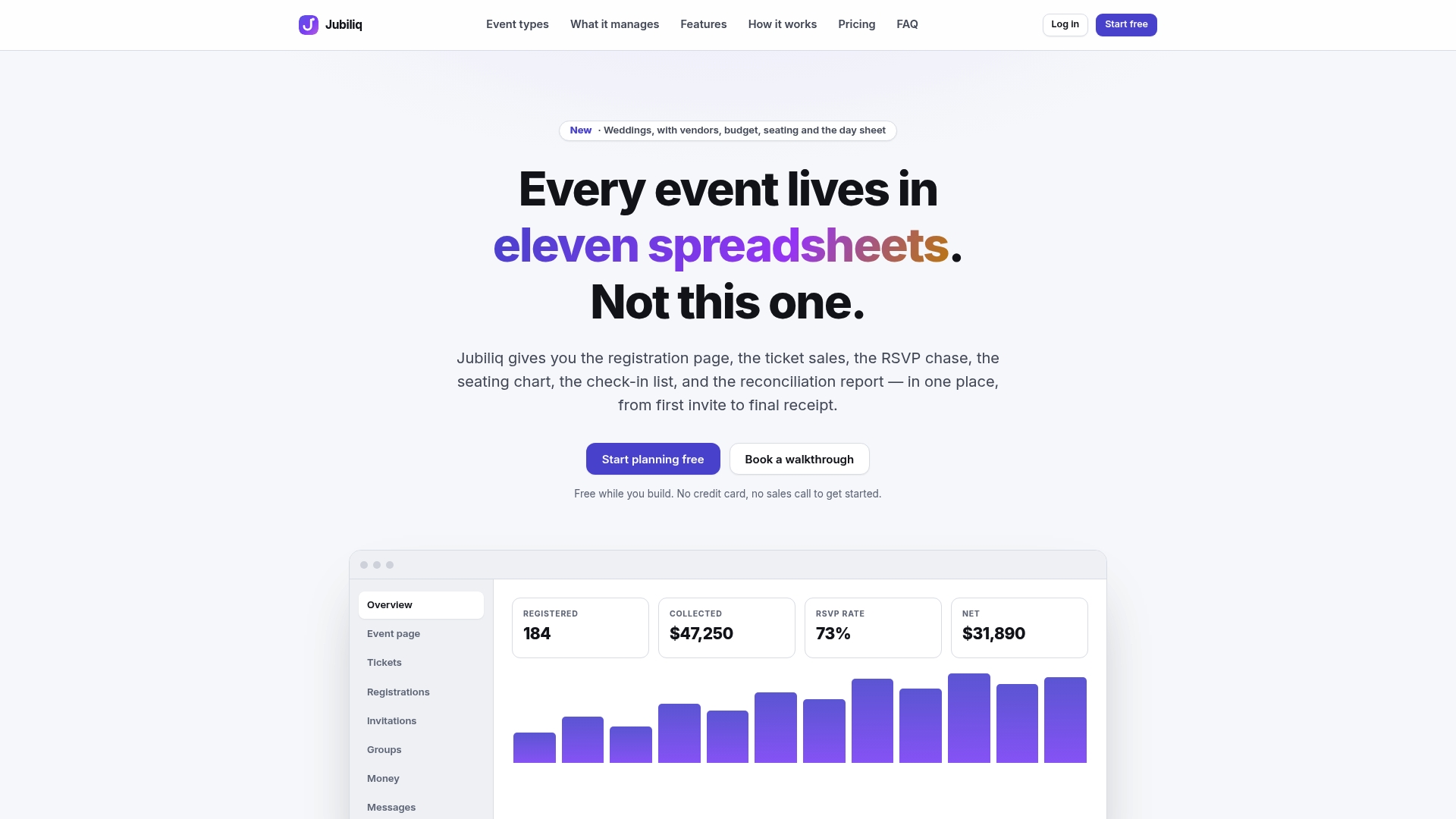
Practical mapping to the sections above:
- Registration and ticketing handle player sign-ups, tiered pricing, and payment collection in one flow.
- Budget tracking and sponsor management keep pledged benefits, invoices, and actuals in the same dashboard.
- Printable day sheets and check-in tools give your volunteers the same roster and schedule information without a separate paper system.
Jubiliq’s Starter plan is free for events without paid tickets, and the Organizer plan charges 2% per paid registration for events selling entries or sponsorships, both detailed on the Jubiliq plans page. Visit the site to see how the interface adapts once you set up a golf tournament event type.
Sources
- Golf Event Planning Kit (PSP)
- 18 Steps to Produce a Successful Charity Golf Tournament (Phil Immordino / AFTD)
- USGA — Other forms of play (Rule 9)
FAQ
What’s the 70/30 Rule in Golf?
There is no widely recognized ratio rule tied to golf tournament planning or golf scoring. If you have seen such a term used elsewhere, it likely refers to a specific club’s informal handicap or course-management guideline rather than a standard planning concept.
What Is a Marshmallow in Golf?
“Marshmallow” is not a standard golf or tournament-planning term with an established definition. It may be informal slang used at a specific club or event, so check with your source for the intended meaning before using it in your own materials.
What Is the 80/20 Rule in Golf?
A common principle is that a small portion of effort or shots accounts for most of your results, similar to how this applies in other fields. It is not a fixed golf-specific standard, so treat any such claim as a rule of thumb rather than an official statistic.
What Is the 3-3-3 Golf Game?
Definitions of the “3-3-3” format vary by club and region, so there is no single official version. If you plan to run a 3-3-3 contest at your tournament, confirm the exact rules with your host course or committee before printing scorecards.
How Far in Advance Should We Book the Golf Course?
Book as early as possible, ideally up to a year ahead, with six months as the minimum workable window according to the PSP planning kit. Earlier booking gives you better date options and more room to negotiate pricing.