Group Ticket Discounts Start at 3: Prepare Before You Call

Group Ticket Discounts Start at 3: Prepare Before You Call
Most venues and transportation providers start small-group discounts at 3 to 9 people, with deeper bulk pricing kicking in at 10 or more. Typical savings fall between 10% and 20%, though tiered programs can go much higher, and group bookings often come with perks like block seating or complimentary extras. Your next move: check the provider’s group sales page or call with your headcount and dates before you buy individual tickets.
TL;DR:
- Peak dates and holidays may exclude group rates, while seasonal sales can beat them; check blackout rules before treating any quoted discount as available.
- Request an itemized quote covering ticket prices, fees, taxes, deposits, and cancellation terms; compare total cost rather than headline percentages.
- Group contracts may require a per person deposit, a nonrefundable handling fee, and final payment three to four weeks before the event.
- Begin inquiries eight to twelve weeks ahead, since providers may recall unsold inventory and peak date blocks can sell out.
- When providers resist price cuts, request block seating, catering vouchers, or a locked rate, since they may have more room on extras.
Table of Contents
- What group discounts look like: thresholds and representative savings
- Who runs group programs and how the booking flow works
- Benefits beyond the percent off: seating blocks, hospitality, and extras
- Contracts, deposits, payment schedules, and blackout rules
- Timing and negotiation tactics to maximize savings
- How Jubiliq helps organizers manage group bookings and payments
- Total cost considerations including fees and taxes associated with group tickets
- Detailed timeline outlining the steps and duration involved in securing group ticket discounts
- Strategies to compare and evaluate multiple group discount offers for best value
- Planner perspective: quick decision checklist for whether to use a group program
- Collecting deposits and managing group logistics without the spreadsheet chaos
- FAQ
- Sources
What group discounts look like: thresholds and representative savings
Group pricing usually works on a two-tier system. Small parties of 3 to 9 people often qualify for a modest discount through standard checkout, while bulk programs for 10 or more people unlock deeper pricing and extra services, a pattern confirmed by LNER’s group travel program. The actual percentage varies by provider and season, but 10% to 20% off is the common range for straightforward group bookings.
Some programs scale further. Amtrak’s Share Fares offer cumulative discounts that increase with each additional traveler, reaching up to 60% off for a party of eight on the same reservation. Cruise lines and theaters run similar tiered structures, often layering non-price perks on top of the percentage savings.
| Group size | Typical threshold | Representative discount |
|---|---|---|
| Small group | 3 to 9 people | 10% to 20% |
| Bulk group | 10 to 15 or more | 10% to 20%, up to 60% in tiered programs |
A few things can change the math:
- Peak dates and holidays often exclude group pricing entirely.
- Seasonal sales can temporarily beat the standard group rate.
- Some operators cap group discounts regardless of party size.
Who runs group programs and how the booking flow works
Standard online checkout typically supports groups up to 9 or 10 people. Beyond that, most providers route you to a dedicated Group Sales team for block seating, single invoicing, and custom pricing, since larger orders need manual coordination that a self-serve cart cannot handle.
Before you contact Group Sales, gather:
- Your event date or a short list of acceptable dates.
- A headcount range (minimum and maximum attendees).
- Seating or accessibility requirements.
- A billing contact and purchase order information if you’re booking for an organization.
The typical booking sequence looks like this:
- Submit an inquiry with your dates, headcount, and budget per person.
- Receive a quote with pricing tiers and available perks.
- Confirm a hold and pay a deposit to lock inventory.
- Submit a rooming list, seating chart, or attendee names by the provider’s deadline.
- Pay the remaining balance before the final due date.
Benefits beyond the percent off: seating blocks, hospitality, and extras
The discount percentage is only part of the value. Group programs frequently include perks that matter more to attendees than a few extra points off the ticket price:
- Contiguous or block seating so your whole party sits together.
- Access to private or semi-private hospitality space before the event.
- Catering vouchers or food and beverage credits.
- Complimentary items, such as one free cabin or room once a group passes a set size, a structure common in cruise group offers.
For a wedding party, corporate retreat, or school trip, guaranteed seating together often matters more than an additional 5% off. A hospitality room or welcome reception can also simplify logistics you’d otherwise have to arrange separately.
Pro Tip: When negotiating, ask for perks before you ask for a bigger discount. Providers often have more flexibility on seating and extras than on the headline percentage.
Contracts, deposits, payment schedules, and blackout rules
Group bookings run on contracts, not casual reservations. Oregon Shakespeare Festival’s group pricing policy illustrates the common structure: a deposit per ticket, a nonrefundable handling fee, and a final balance due several weeks before the performance.
Common contract elements include:
- A per-ticket or per-person deposit due at the time of booking.
- A nonrefundable handling fee separate from the ticket price.
- A final balance deadline, often 3 to 4 weeks before the event.
- Minimum group size requirements that must hold through final payment.
Providers also reserve the right to recall unsold inventory held for your group, which means a block you haven’t finalized with names and deposits can disappear. Virgin Voyages’ group booking process works on a similar “group shell” basis, where names and deposits must land within a stated window or the hold lapses.
Protect yourself by asking for:
- A written hold window with a specific expiration date.
- A clear refund policy for individual cancellations within the group.
- Itemized invoicing that separates deposits, fees, and the final balance.
Our guide to refund policy clauses walks through language worth including in your own cancellation terms if you’re reselling tickets to attendees.
Timing and negotiation tactics to maximize savings
Booking early matters most for peak dates, when group inventory sells out fastest. For flexible groups, off-peak days or preview performances often come with better pricing and looser minimums, a pattern Northern’s group travel program also reflects for rail travel during low-demand periods.
Use these levers when you negotiate:
- Flexibility on seating location in exchange for a lower rate.
- A larger deposit or earlier commitment to secure locked pricing.
- Willingness to finalize headcount early, which reduces the provider’s risk.
Pro Tip: If a provider won’t move on price, ask for catering vouchers, a complimentary pass for your organizer, or a locked rate that won’t increase even if you add attendees later.
If you’re coordinating transportation alongside tickets, booking passenger vans 2 to 3 months before peak travel follows the same early-commitment logic that unlocks better group ticket pricing.
How Jubiliq helps organizers manage group bookings and payments
Once you’ve locked a group rate, the administrative work shifts to tracking who’s paid, who still owes a deposit, and what the final invoice should look like. We built Jubiliq’s RSVP and headcount tracking to handle exactly that, so you always know your current attendee count against the minimum your group contract requires.
We provide an adaptive interface that surfaces deposit tracking and relevant financial dashboards while hiding tools you don’t need. A printable day sheet consolidates seating, catering, and schedule details for the event day, and real-time payment tracking helps reconcile a single invoice instead of chasing individual receipts, lowering the risk of missing a provider’s deposit deadline. Our early-bird pricing guide covers how to structure your own deposit tiers if you’re reselling group tickets to attendees.
Total cost considerations including fees and taxes associated with group tickets
The quoted group rate rarely matches what you’ll actually pay. Handling fees, sometimes nonrefundable, are standard on theater and venue group bookings, as Oregon Shakespeare Festival’s policy makes explicit. Build these into your budget before you commit to a headcount.
Watch for:
- Service or handling fees charged per ticket or per transaction, separate from the discounted price.
- Deposit amounts that count toward the final balance but may be nonrefundable if your group shrinks below the minimum.
- Taxes, which apply to the full ticket price even after a discount and vary by jurisdiction and venue type.
- Gratuity or service charges common on cruise group bookings, often added automatically to the final invoice.
- Cancellation or change fees if attendee names shift after you’ve submitted your rooming list or seating chart.
When you compare a group rate against buying tickets individually, calculate the total cost, discount plus fees plus deposit terms, rather than comparing headline percentages. Ask Group Sales for an itemized quote that separates the ticket price, fees, and taxes line by line, so you’re not surprised by the final invoice.
Detailed timeline outlining the steps and duration involved in securing group ticket discounts
Securing a group discount is a multi-week process, not a same-day transaction, especially for larger parties.
8 to 12 weeks out: Research providers, compare group sales pages, and submit initial inquiries with your dates and estimated headcount.
6 to 8 weeks out: Review quotes, negotiate perks or pricing, and place a deposit to hold your block. This is when cruise group offers typically require advance contracting, since benefits and availability are seasonal and capacity-controlled.
4 to 6 weeks out: Finalize your headcount, submit a rooming list or seating preferences, and confirm any accessibility needs.
3 to 4 weeks out: Pay the final balance, a deadline that lines up with OSF’s group pricing terms and similar policies across theaters and venues.
1 to 2 weeks out: Confirm final logistics, print your day sheet, and distribute tickets or confirmations to attendees.
Starting 8 to 12 weeks ahead gives you room to negotiate and protects you from inventory recalls on unsold blocks. Waiting until a few weeks before your event usually means accepting whatever rate and seating remain available.

Strategies to compare and evaluate multiple group discount offers for best value
Comparing group offers on percentage discount alone misses most of what determines actual value. Request itemized quotes from every provider you’re considering, then line up the same four factors side by side: ticket price after discount, fees and deposit terms, included perks, and cancellation flexibility.
A provider offering 15% off with free block seating and a lenient cancellation window often beats one offering 20% off with a nonrefundable deposit and a rigid final headcount. Weigh perks like complimentary cabins, hospitality access, or catering vouchers against their cash value, since these can outweigh a few extra percentage points on the ticket price.

Pay attention to blackout dates and capacity restrictions too. A deep discount that only applies to a date your group can’t use isn’t a real option. If you’re coordinating related logistics, like booking a private group meal alongside your tickets, compare those vendor terms the same way: total cost, flexibility, and what’s included, not just the advertised rate.
Planner perspective: quick decision checklist for whether to use a group program
Ask yourself three questions before you commit to a group program. Do you need contiguous seating for your party? Do you want one consolidated invoice instead of individual purchases? Are you willing to manage a deposit and meet a final payment deadline?
If you answer yes to two or more, pursue group sales. The administrative trade-off is worth it when seating and billing simplicity matter.
If you answer no to most of these, individual tickets or a split-purchase approach may serve you better, especially for a small, flexible group where the time spent managing deposits and headcounts could outweigh the savings. A discount that saves $15 per ticket isn’t worth it if you spend hours chasing payments from twenty people.
— HCRF
Collecting deposits and managing group logistics without the spreadsheet chaos
Once your group rate is locked, the real work is tracking who’s paid, confirming headcounts against your contract minimum, and reconciling one invoice instead of a dozen Venmo screenshots. This platform is designed to carry that load: RSVP tracking shows your live headcount, payment tracking shows who still owes a deposit, and a printable day sheet pulls seating and schedule details into one document for the day of your event.
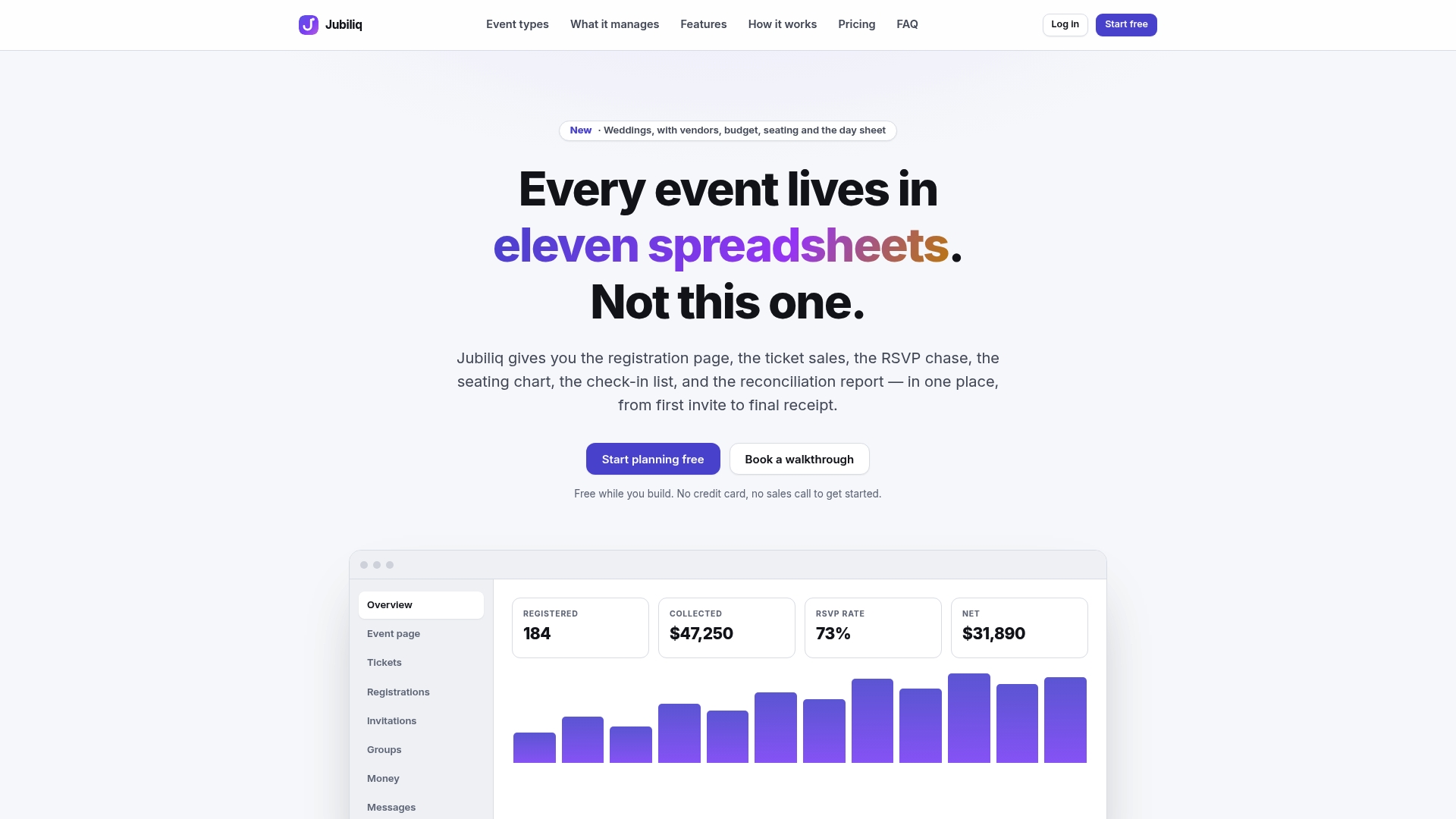
We offer plans suitable for different scales of group coordination, including options for managing RSVPs and logistics, selling tickets or collecting deposits, and handling multiple events or complex programs.
Start with the Starter plan to track your next group booking, or visit Jubiliq to see which plan fits your event.
FAQ
How can I get heavily discounted concert tickets?
Booking early for popular dates and staying flexible on seating location improve your odds of a better rate.
Can you get a group discount on train tickets?
Yes, rail operators commonly offer group discounts starting at small-group thresholds of 3 to 9 travelers, with larger discounts for 10 or more, as outlined in LNER’s group travel program. Tiered programs like Amtrak’s Share Fares can offer up to 60% off for a party of eight traveling together.
What is the best app for finding discounted tickets?
There’s no single best app, since group discounts are usually negotiated directly through a venue’s or provider’s own group sales team rather than found through a ticket marketplace. A planning tool that tracks RSVPs and payments, like Jubiliq, helps you manage the group once you’ve secured a rate, though it doesn’t source the discount itself.
Is there a way to negotiate better group ticket pricing beyond the standard rate?
Yes, you can often negotiate perks like block seating, catering vouchers, or a locked price in exchange for an early deposit or firm headcount commitment. Providers frequently have more flexibility on added extras than on the advertised discount percentage.
What should I prepare before contacting a group sales team?
Have your event date or acceptable date range, an estimated headcount, any seating or accessibility needs, and a billing contact ready before you reach out. This speeds up the quote process and helps you lock inventory before it’s recalled.
Sources
- Group travel | LNER
- Get Up to 60% Off Small Group Travel With Share Fares | Amtrak
- Group offer | Variety Cruises
- Group pricing and policies | Oregon Shakespeare Festival